News and updates

This week’s blog is a collection of bits and pieces.

Half Sick of Shadows cover

First, there’s a reminder that at the Before the Second Sleep blog alongside the review of Half Sick of Shadows there’s a giveaway copy to be won – just leave a comment to be in with a chance in the draw, which will take place sometime in November.

Secondly, for a bit of fun here is the link to the Desert Island Books chat which appeared on Prue Batten’s blog. What ten books would you take if you were going to be stranded on a desert island for a period of time. Well, you can find out my choices at that link – it’s a right mixture of fiction and non-fiction. And I got to pick my very own desert island, and with a minor stretch of credulity I selected Bryher, one of the Isles of Scilly. There are a lot worse places that you could get stranded…
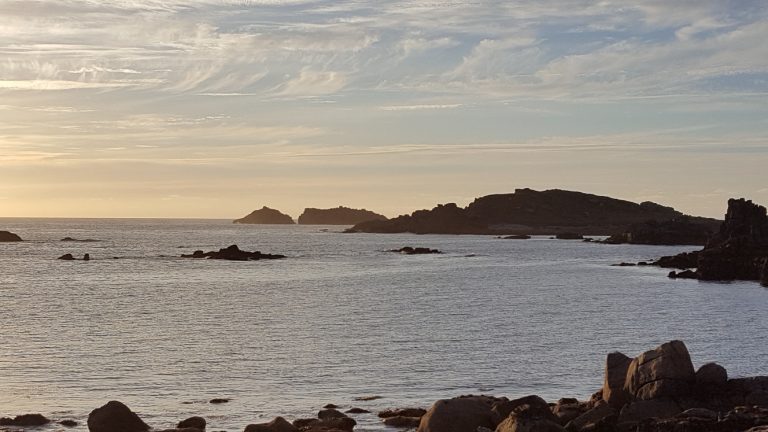
The north end of Bryher

What about space news?

Artist's impression, Dawn at Ceres (NASA/JPL)
Artist’s impression, Dawn at Ceres (NASA/JPL)

Well, there have been recent updates to two of my favourite NASA missions. The future of Dawn, which has been orbiting the asteroid Ceres for some time, after originally studying Vesta, has been in question for some time. Basically there were two choices – leave the craft in orbit around Ceres until the onboard fuel supply runs out, or move on to a third destination and learn something there. Either way, the plan for the end of life has always been to avoid accidentally contaminating Ceres or anywhere else with debris. Well, the decision was finally made to stay at Ceres, carry out some manoeuvres to increase the scientific and visual return over the next few months, and then shift to a parking orbit late next year. The low point of the orbit should be only about 120 miles from the surface, half the height of the previous approach.

New Horizons badge (NASA)

And finally, New Horizons, which provided great pictures of Pluto and Charon a couple of years ago, has been woken from its standby mode in order to carry out early preparations for a planned encounter in the Kuiper Belt. The target this time goes by the catchy name of 2014 MU69. Pluto is on the inside edge of the Kuiper Belt, whereas 2014 MU69 is in the middle. But although there are a fair n umber of bits of rock scattered in this disk-like region, it is still vastly empty, and the chances of New Horizons colliding with a previously unknown body are very slim. If all goes according to plan, the craft will navigate rather closer to 2014 MU69 than it did to Pluto – a necessary action, as the light levels are considerably lower. Since we know very little about the body, this does present a level of risk, but one which is considered worth taking. There are a few course corrections planned for late this year, then it’s back into sleep mode for a few months until the middle of next year. Flyby should happen on January 1st, 2019. And after that? More targets are being explored, and the power supply and onboard systems are reckoned to have another twenty years of life, so we could be in for more treats…

Left behind by events, part 2

So, picking up the story where l left off two weeks ago, it’s time today to look at science fiction set in the near future from its author. Last time the focus was mainly on stories set hundreds of years in the future, where the problem is often that the technology seems pitched at too low a level. But there are different pitfalls with telling a tale in the next couple of generations. Here, an author may well assume that all kinds of things will happen quickly, when in fact they take much longer.

Flying car from Bladerunner (PInterest)

Flying cars are a stock image for a lot of stories, including Back to the Future and Bladerunner. Now, cars have changed in lots of ways over the span of my lifetime, but they don’t fly (and we still don’t have hoverboards). Yes, periodically there are optimistic announcements that they’re in development, but they certainly aren’t normal consumer items. The future bits of Back to the Future are set in 2015, and the original Bladerunner in 2019, so both are very contemporary.

Interceptors from moonbase in TV series UFO (PInterest)

Likewise, lots of science fiction authors assumed that we would have a moon base well before now, and that manned space missions would have visited other places in the solar system. One of my favourite books, Encounter with Tiber, written in 1996, thought it credible we would have a lunar base by around 2020.  Space 1999 and the TV series UFO were even more optimistic. The prominence of the ISS, orbiting a mere two or three hundred miles from the Earth, was not often imagined, nor the enormous success of unmanned exploratory probes. Missions like Dawn, to the asteroid belt, or New Horizons, to Pluto and beyond, don’t feature. Still less the Hubble space telescope, or the LIDO gravity wave detector, which spectacularly hit the news this week.

Social change seems profoundly hard to predict. Orwell’s 1984 still has the capacity to grip us with its stark picture of state control, but actually its vision of the future is wrong in all kinds of ways. A great many authors assumed – with good reason – that a third world war would take place in the 20th century. EE (Doc) Smith’s Triplanetary simply had “19–?” as the setting for an atomic missile war, following after “1918” and “1941”. Do Androids Dream of Electric Sheep (the short story behind Bladerunner) presupposes a war and heavy resulting pollution behind the drive to spread to other planets, and the construction of android replicants as labourers.

But all of these stories remain worth reading. We often judge the value of a story more for its human drama, and its ability to convincingly present a human response to crisis, than for the accuracy of its timeline. That is as it should be, I think.

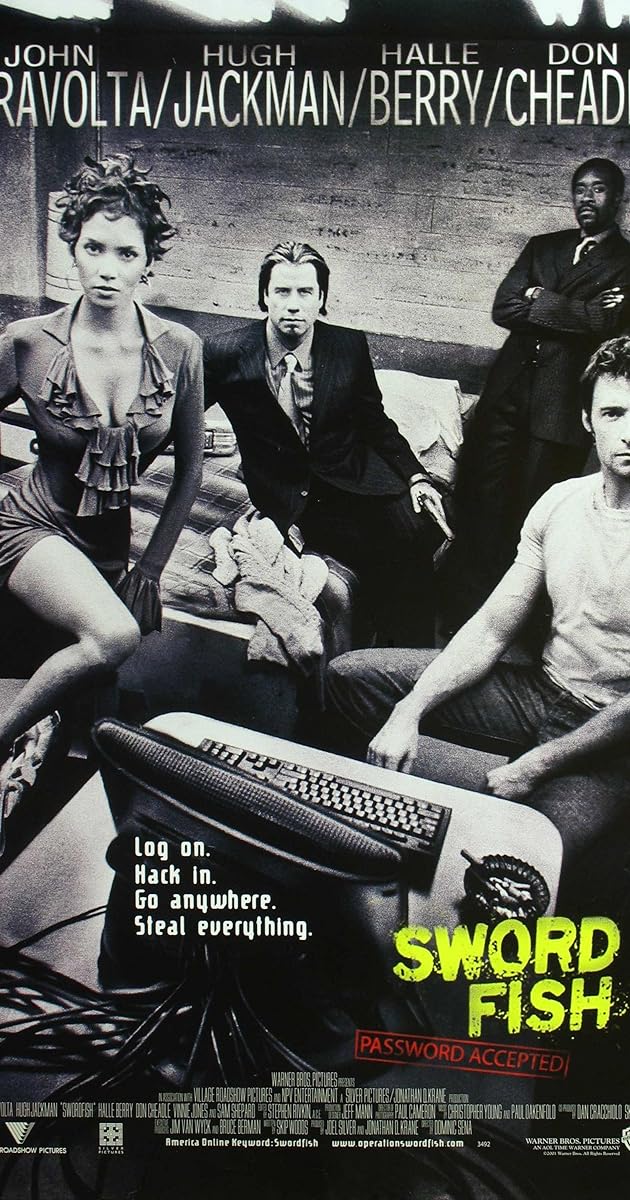
Film Swordfish (IMDB)

I sometimes read criticisms of fiction which focus on the correctness or otherwise of minute details in the text, and sometimes they miss the point. Most of us don’t know the exact terminology of the parts of modern American handguns, and most of us wouldn’t know if the wrong word was used – yes, I read a scathing comment from one reviewer on just this subject a while back. But if the story holds up, most of us don’t mind. Then there’s my own area of expertise – programming. I find it hilarious when expert coders are depicted in films as hammering out on a keyboard at lightning rate without looking at either their hands or the screen. We just don’t work like that. A great deal of time is actually spent in copy-and-paste from geeky sites like StackOverflow (followed by a fair amount of careful reconfiguration). But if the story’s good, I’ll happily overlook that.

There’s certainly a place for research, and good research, in any area of fiction, but not pursued, surely, at the cost of the story and all of its other dimensions alongside the factual ones. So yes – science fiction stories set in the near future often do get things wrong, but often that doesn’t really matter.

A Review of Half Sick of Shadows – with giveaway

Kindle Cover - Half Sick of Shadows
Kindle Cover – Half Sick of Shadows

I was going to do part two of Left Behind by Events, but when this review came out on the Before the Second Sleep blog, plans changed. You will guess when you read it that I was very happy about this – not just the review itself, but the way it brought out comparisons and associated thoughts. I’m going to quote extracts from the review here… for the full thing you’ll have to follow the link.

And if you do, there’s a bonus – leave a comment at the linked blog (not this one) and your name will go into a hat for a free giveaway copy of the book.


Contemporary author Richard Abbott takes this one step further by incorporating his own already popular literary bents—historical and science fiction—into a highly accessible re-interpretation of Tennyson’s masterpiece, itself based on the life of Elaine of Astolat, a tragic figure within the Arthurian catalogue. Written in prose and sectioned off a few more times than “The Lady of Shalott,” Abbott’s Half Sick of Shadows takes us into a world of beauty and cruelty, loving and longing, a world of isolation in which the Lady yearns for her own voice and must choose which sacrifice to perform.

The metamorphosis of this re-telling gifts readers the feeling that they are receiving the Lady’s story for the very first time. For those familiar with Abbott’s previous work, the historical may be an expected element, but the speculative angle is a definitive bonus, and done with a subtly that enhances rather than reduces the Arthurian and historical within Tennyson’s version. There is a machination about the mirror, in its gathering of data as the Lady sleeps between instars, or growth states, and during her acquisition of knowledge, and periodically we hear a word or phrase (e.g. gibbous) that injects the story with a small flavor of the author’s previous forays into a galactical colony.

For me, this speaks volumes about Abbott’s ability to transition from genre to genre: he clearly is comfortable writing in a variety, and with Half Sick of Shadows we see this taken to another level as he combines it into one: history, mythology, fantasy and speculative. Perhaps some might even add mystery and/or romance, for the Lady catches a glimpse of Lancelot in her mirror, and from then on everything she acts upon, whether in pragmatic caution or foolish abandon, is in response to the spell she knows she is under, a magic that will destroy her should she try to look directly at the world outside. The manner in which Abbott expands upon the Lady’s life and events within, simultaneously breaking ground while remaining true to Tennyson as he retains the spiritual within the legends of Camelot, is inspiring and captivating. The imagery and descriptive language is economic yet rich.

Whether re-visiting or new to the legend, readers will cherish Abbott’s novella, an original and enthralling re-telling suitable to current sensibilities, with a blend of Victorian sensory and critical, and the Modernist aim to further pique cultural curiosity. It is a merger in which Abbott splendidly succeeds.


Once again: the link to the full review is https://beforethesecondsleep.wordpress.com/2017/10/09/book-review-half-sick-of-shadows-with-giveaway/. Like it says, there’s a giveaway copy to be won – follow that link and leave a comment to be in with a chance.

Left behind by events, part 1

This is the first part of two, in which I look at the ways in which books show their age.

I read a lot of science fiction, and I watch a fair number of science fiction films and TV series. The latest addition is Star Trek Discovery, the latest offering in that very-long-running universe. For those who don’t know, it’s set in a time frame a few years before the original series (the one with Captain Kirk), and well after the series just called Enterprise.

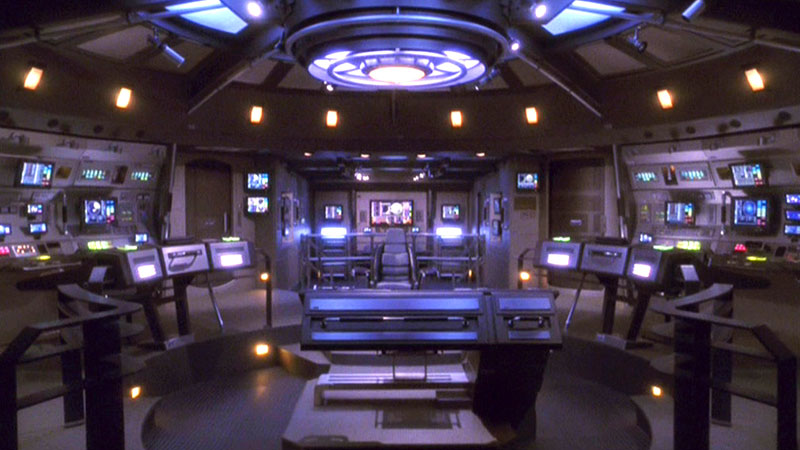
Discovery bridge (TrekNews)

Inevitably the new series has had a mixed reception, but I have enjoyed the first couple of episodes. But the thing I wanted to write about today was not the storyline, or the characters, but the presentation of technology. The bridge of the starship Shenzhou looked just like you’d imagine – lots of touch screen consoles, big displays showing not just some sensor data but also some interpretive stuff so you could make sense of it. And so on. It looked great – recognisable to us 21st century folk used to our own touch screen phones and the like, but futuristic enough that you knew you couldn’t just buy it all from Maplin.

Original series Enterprise bridge (PInterest)

But herein lies the problem. Look back at an old episode of the original series, and the Enterprise bridge looks really naff! I dare say that back in the 1960s it also gave the impression of “this is cool future stuff”, but it certainly doesn’t look as though it’s another decade or so on from the technological world of Discovery.

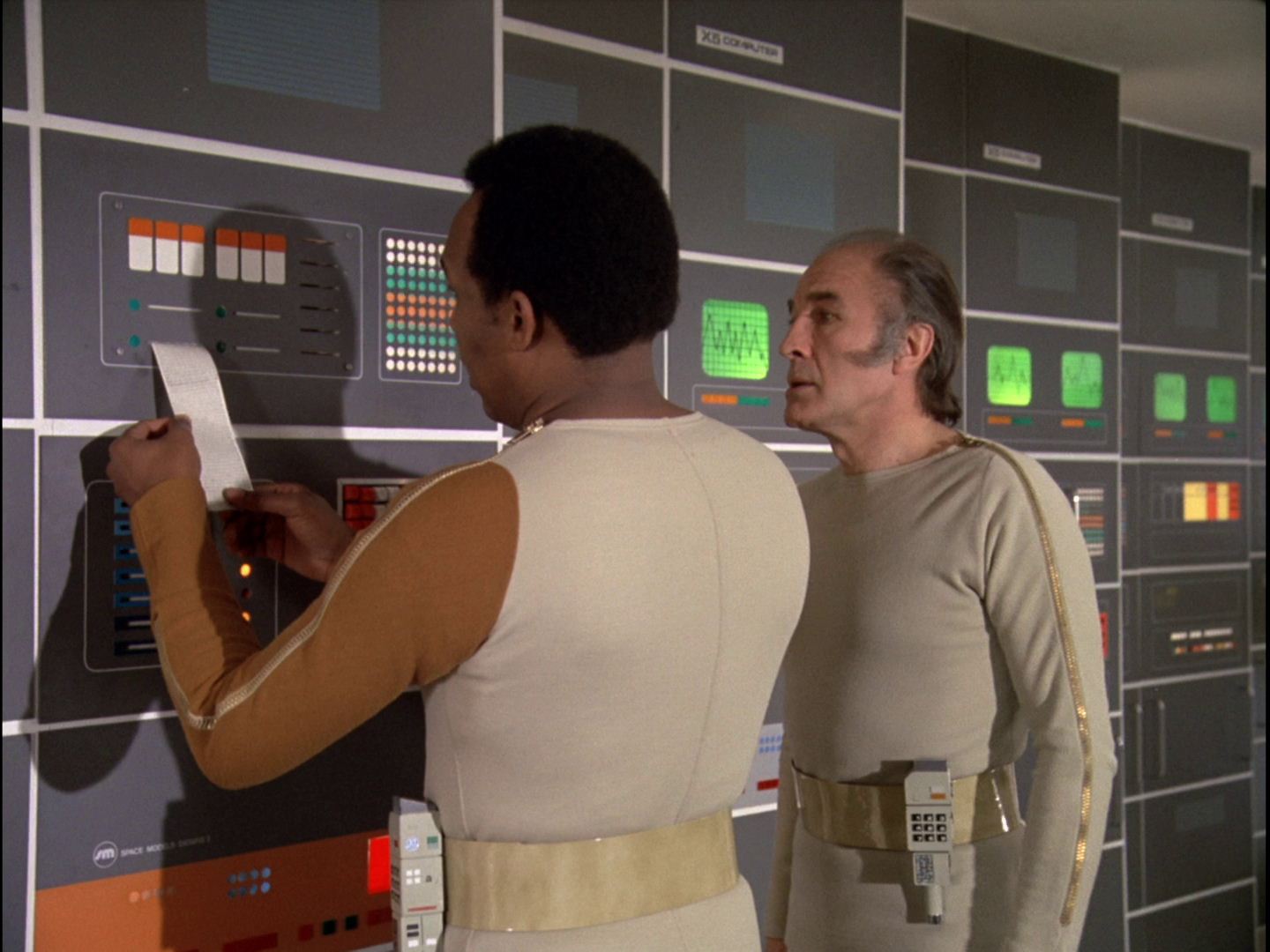
Space 1999 paper output (http://catacombs.space1999.net)

Basically, our ability to build cool gadgets has vastly outstripped the imagination of authors and film makers. Just about any old science fiction book suffers from this. You find computers on board spaceships which can think, carry out prodigiously complex calculations, and so on, but output their results on reams of printed paper. Once you start looking, you can find all manner of things like this.

Forbidden Planet - The Tempest in space (DenOfGeek)
Forbidden Planet – The Tempest in space (DenOfGeek)

Now, on one level this doesn’t matter at all. The story is the main thing, and most of us can put up with little failures of imagination about just how quickly actual invention and design would displace what seemed to be far-fetched ideas. On the whole we can forgive individual stories for their foibles. If it’s a good story, we don’t mind the punched-card inputs, paper-tape outputs, and so on. We accept that in the spirit that the author intended. Also, many authors are not so very interested in the mechanics of the story, or how feasible the science is, but in different dimensions. How might people react in particular circumstances? What are the moral dimensions involved? What aspects of the story resonate most strongly with present-day issues?

The particular problem that Discovery has is simply that it is part of a wider set of series, and we already thought we knew what the future looked like! A particular peril for any of us writing a series of books.

Now it’s not just science fiction that can be left behind by the march of events. Our view of history can, and has, changed as new evidence comes to light. Casual assumptions that one generation makes about past societies, interactions, and chronology may be turned over a few years down the line. Sometimes we look at the ways in which older authors presented things and cringe. Historical fiction books might easily be overtaken by research and deeper understanding, just as much as science fiction. It’s a risk we all face.

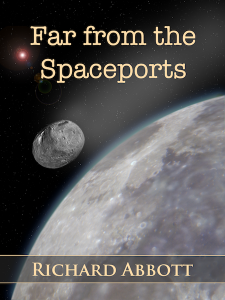
Next time – some thoughts about my own science fiction series, Far from the Spaceports, and the particular things in that story that might get left behind. And also, the particular problems of writing about the near-future.

Far from the Spaceports cover