Historical dialogue and translation

I have seen several blog articles recently on the subject of fictional dialogue. However, I have not yet seen any which have tackled the specific issue of dialogue in historical fiction. Most are concerned with matters such as use of slang or idiomatic language in contemporary writing – whether this works or not, how quickly it ceases to be relevant, and how to use it.
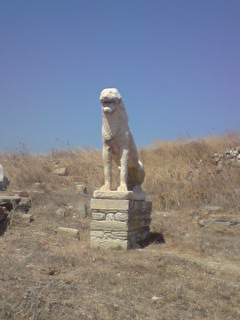
Status - Delos, GreeceHistorical fiction faces slightly different problems, though, and I want to tackle these over a few blog articles, especially as they are closely related to the translation of historical texts. For one thing, many of us who write about the past are also writing about people speaking another language – even the English of Chaucer’s time is quite different in certain ways from modern English. Along with a lot of other people, I write about a place and time where the characters’ language was scarcely related at all to English.

A reviewer of In a Milk and Honeyed Land commented that she felt that some of the dialogue was too modern, and in particular picked out my frequent use of “look” or “see“. We had a great discussion about this – one of those really positive online experiences. My basic answer was that in the Hebrew Bible, this is actually one of the more common words (hinneh). In older translations this is typically represented by “lo” or “behold“, and most modern translations simply omit it… ironically, given the discussion, because they consider it too archaic! Egyptian has a similar word (mek) which is also frequently used, and similar comments can be made of other languages of the region,

The basic idea is that this word pulls the reader or listener into the action alongside the protagonist. For example, in Genesis 15, Abram is protesting to God: “And Abram said, “Look, to me you have given no seed: and look, one born in my house is my heir.” (Both words “look” are variations of hinneh).

So from my point of view, my characters’ use of “look” or “see” is quite period-correct… but evidently it did not carry this idea to the reader in question, who herself writes historical fiction set in another age, so is very well informed.

This set me thinking about how to present historical dialogue. I suspect that for many people, “ho varlet, why dost dare stand before me? Unhand me and get onst thy knees!” would seem genuinely historical. But to my Late Bronze characters, such phrasing (always presuming that anybody actually spoke like that, which I suspect is unlikely) would be unthinkably far in the future.

This brings me to translation. By and large there are two schools of thought about this. One is to take the text and translate very literally, keeping as close as possible to the original words and sentence structure. This is usually associated with academic or other “serious” contexts. At another pole is an approach called “dynamic equivalence“, in which the translator basically tries to write what, in their opinion, the original author would have said if they were speaking today.

You can make a case for both of these, and just now I am not going to promote one way above the other. Pretty obviously, dynamic equivalence makes a text more accessible to a casual audience, but at the cost of deliberately discarding forms and patterns present in the original. In another blog post I’ll give some examples of this.

For today it’s enough just to open up this problem. How do you make your characters speak in ways that as author you are confident has roots in your period of choice… while at the same time persuading readers they are reading something set in the past?

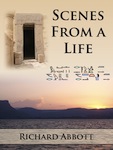
I have read books which adopt the dynamic equivalence approach and simply use modern phrasing, on the grounds that this is how the people would speak if they were alive today. As a reader, this does not work for me, but I can see the logic. And clearly it is not suitable to write totally in the characters’ idiom – how many people would enjoy In a Milk and Honeyed Land or Scenes from a Life if the dialogue was in Canaanite, early Hebrew, or Egyptian? How far should one go in trying to capture something of their way of speech, and the occasional struggles of trying to communicate cross-culturally?

And how far, I wonder, does the problem extend to other genres? When might writers of fantasy or science fiction use archaic-sounding language to good effect? Quite apart from the general techno-babble style of things, I remember being fascinated by Isaac Asimov’s coining of the word “richified” (to mean “bribed“, of course) to signal a slightly backward world… though still with space flight and other things which are futuristic to us!

Review – Athame and Wrath by Morgan Alreth

ABNA General Ficton categoryTime for a review amongst all the excitement of Scenes from a Life and the ABNA awards.

So, this review covers the first two books in Morgan Alreth’s The Unfortunate Woods series – Athame and Wrath. The series continues in a third book which at the time of writing has not yet been released.

These are fantasy books, set in a world where humans are the most numerous species, but share the land (and especially the forest) with several other natural and supernatural life forms. Relationships between the species tend to drift from neutral towards hostile, with occasional times of cooperation for specific shared goals.

Magic is, as you might expect, a vital part of the setting. The magic system is based around the four classical elements (fire, water, earth, air), with connections to the four seasons as well as other binary or four-fold natural or human divisions. Each element is linked to a deity with suitable qualities. It seems to me to be fundamentally well thought-out, particularly in Wrath where there is more development of the interconnections. An important plot theme is that pretty much any serious use of magic tends to have unpredictable side-effects, small compared to the original purpose but needing to be taken into account.

Athame opens in a wild and dangerous forest. A woman living here, Jess, chooses to help a man, Pete, who is lost, saving his life from any number of potential threats. He turns out to be a significant player in the royal succession drama unfolding in the country. Unsurprisingly, but credibly, the two eventually become lovers.

The plot continues with Jess and Pete venturing out of the forest and back to the capital city. This turns out to be every bit as dangerous as the wild forest, but with human rather than exotic enemies. There are definite echoes of Crocodile Dundee here, though the gender roles are switched, and the couple here is much more equally matched in talent and ability.

Athame ends with them having resolved a serious external threat, but separating for what appear to be perfectly sensible and necessary reasons. However, this is a source of grief to both.

Wrath – over twice as long according to my kindle – tracks subsequent events. They start separately, in different regions of the world, as they try to resolve their individual destinies; both have to face different but significant threats. Eventually they reunite, but tact and spoiler avoidance forbids me saying how this turns out. Suffice it to say that their quest returns them to their country of origin, which by now has fallen into serious civil unrest.

The hints and clues you get about the third book indicate that the overall problems of succession and disunity will be resolved, perhaps with a level of reconciliation between the various non-human species as well.

So, the books are interesting, and many aspects of the world seem credible to me. What are the down sides? Firstly, there is a theme I have also encountered in some of Morgan’s other writing. Rural settings may well be dangerous, but are basically clean and honourable; rural individuals are poor and bluntly spoken but honest. In contrast, cities and towns – anything bigger than a handful of houses together – are filthy, disease-ridden, and full of cruel and wickedly motivated individuals. Countryside is good: towns are bad. I am not really convinced by this.

In Athame, another rather simple binary opposition is between organised religion (largely in the hands of men and fundamentally corrupt) and personal spirituality (largely in the hands of women and basically uplifting and respectable). Wrath is more nuanced about this, and smooths out the earlier stark contrast into lots of intermediate shades of a spectrum.

Another difficulty is with the opponents. I guess it is par for the course for fantasy heroes to get increasingly more powerful themselves, and have a coterie of increasingly powerful followers. But how do you then find worthy adversaries? Somehow, the filthy, disease-ridden cities and their temples manage to turn out a whole collection of fearsome, top-of-the range fighting men and magician-priests.

The production of the kindle copy is mixed. My copies were downloaded from Smashwords, and the rather patchy navigation may be a consequence of that site’s conversion software. However, there are a surprising number of spelling errors, format problems, and other minor issues which should have been caught during rounds of proof reading.

In summary, these two books still come out as four star books for me. Certainly worth the read if you like fantasy books, and the series develops some interesting ideas. The gradual build-up of the plot is credible. Speaking as a Brit, some of the dialogue rather grates, but US readers might appreciate it more. However, the flaws which I have mentioned diminished my enjoyment of the whole, and made me feel that Morgan could have lavished a little more care on the production of the books as well as the imaginative aspects. I do intend to catch up on the conclusion of the series in time, so these flaws have not deterred me from carrying on.

These books were made available to me without charge but with no expectation of a review.

Scenes from a Life ABNA Excerpt now available for free download

Well, Amazon have now made available the ABNA Excerpts as free kindle downloads at the various international sites. For Scenes from a Life, navigate to one of:

On the Amazon sites you can preview the first couple of pages, or download in kindle format the Excerpt for free. The Excerpt for Scenes from a Life was about 3750 words long – the upper limit was 5000 words, but I wanted to end the Excerpt at an obvious section break. It represents part but not all of Chapter 1.

General Fiction ABNA logo

You do not need an actual kindle device to read it as there are kindle viewers for all kinds of other platforms such as PC, Mac and so on.

Like any other purchase on Amazon, you can add your own reviews of the Excerpt. It’s not very clear how audience reviews feed into the next stage – the main judging is done by staff from Publishers Weekly who have access to the entire manuscript now. However, in addition to this “Amazon customers can download, rate, and review Excerpts on Amazon.com, providing feedback to Amazon Publishing Editors about submissions”. So if anybody is motivated to write such a review, I would very much appreciate it. There is about a month for this stage of the process, until May 23rd or thereabouts, and the names of those going through to the semi-finals are announced around June 13th.

Amazon ABNA expert review comments

At some stage soon the excerpts for all the ABNA quarter-finalists will be published on Amazon.com – as soon as I know where I’ll post about this. Meanwhile the two review comments by (anonymous) ABNA expert reviewers have appeared. Here are some highlights…

  • We learn so much about the life and work of Makty. I found it very interesting…
  • Elegantly written and full of rich back story about Makty and how he’s fashioned his current existence…
  • On a line level, this is one of the strongest pitches I have read…

The full review comments follow… at this stage the reviewers were only exposed to the “Excerpt”, ie the first 3750 or so words (rather less than the first chapter). At the next stage then (so I understand) the general public gets to see the “Excerpt”, and the reviewers the whole lot.

  1. First reviewer
    • What is the strongest aspect of this excerpt?
      We learn so much about the life and work of Makty. I found it very interesting …not only how he worked at decorating the tombs but also his life style i.e. how he, although he worked hard and was very frugal, still chose to move on to a new location after not staying too long in any one place.
    • What aspect needs the most work?
      Maybe it would have been even more interesting if we had gotten even a hint as to where we were heading and not so much detail of Makty’s painting etc.
    • What is your overall opinion of this excerpt?
      I found it very interesting and, although I would have preferred to have at least of a vague idea of what was coming, I believe it would ultimately turn into a very good story. I also learned some things about tombs it never occurred to me to wonder about.
  2. Second reviewer
    • What is the strongest aspect of this excerpt?
      Elegantly written and full of rich back story about Makty and how he’s fashioned his current existence. The author does a good job of toggling back and forth between past and present action, making us feel as though much more has actually happened in this chapter than actually does. Makty’s strange dream plants just enough of a seed that we can see conflict is on the horizon. His nomadic lifestyle and desire for space and movement also complicate his character, deepening a character otherwise defined by his work. Lots of potential in the the scope and historicity of the work.
    • What aspect needs the most work?
      I mentioned not a lot happens already, but really, not much happens. Outside of the dream, I’m not sure I see a true hook. This is a chapter full of throat clearing and set up. Nothing wrong with that, but the lede is buried under an awful lot of information and description, mostly Makty ruminating, ruminating some more, and then slightly re-calibrating. Without other characters, dialogue, or a shift in scene, I found it hard to stay closely with Makty’s thoughts throughout the chapter. Give this guy something else to ping himself off of, and I think this chapter opens up and breathes a little better.
    • What is your overall opinion of this excerpt?
      On a line level, this is one of the strongest pitches I have read. This author has a sense of what he’s doing, even if I’m not as engrossed by the writing as I could be. I worry about audience with this piece. Who is the market? Is it for people who value character driven stories or historical fiction? A modern novel or more fabelistic? Movement and the journey the author promises in the pitch will be key. ACTION will be key. This excerpt is certainly well crafted enough to demand further attention, especially given its superior style.

Schematic map - the area around Waset (modern Luxor)

Three geeky review snippets

Well, three snippets for today. Full reviews will follow on Amazon etc but I am a bit short of time today.

Cover image - The End of the Bronze Age
First up is Robert Drews’ The End of the Bronze Age which of course I have blogged about a couple of times before. I have now finished this so it’s time to draw it together. Basically my feeling is that Drews makes a good case for his principal point, which is that the collapse of almost all of the major Late Bronze civilisations around 1200BCE (which Drews simply calls The Catastrophe) was primarily the result of changes in military technology and tactics. Not everyone will agree with this, and Drews is happy to acknowledge that factors such as climate change, drought, migration, natural disasters such as earthquakes, and so on contributed to the collapse in particular locations. However, his most persuasive point is that these factors cannot have affected the whole of the eastern Mediterranean at the same time, and also that the great Late Bronze empires had faced these challenges before and overcome them.

His military explanation is built around an exploration of methods of warfare before and after 1200. Before, major powers (even minor city states) fought battles using elite bow-armed chariotry, supported by youths (called ‘runners’ in several traditions) who looked after their own and finished off the fallen enemy. Massed infantry formations did not exist as an active force, only as static defenders, and cavalry were used for scouting and pursuit rather than fighting. After the Catastrophe, infantry ruled the battlefield, having worked out how to neutralise the effect of the chariot arm. Weapons changed accordingly, with new designs of swords and javelins sweeping around the Mediterranean within a decade or two.

I am sure the debate will continue for some time to come, since solid textual and archaeological information is scarce around this era, but Drews has, in my view, put forward a compelling argument here.

Cover image - Anglo-Saxon Runes
Second up is a book which I purchased at Sutton Hoo a few week ago, Anglo-Saxon Runes, by John Kemble. This is actually a very old book, dating from 1840 but given a make-over and some editorial notes by Bill Griffiths in the 1990s with several reprints since. For me, reading this has more to do with historical interest since it is not an especially good source book for learning runes. It does, however, have some fascinating glimpses into the 19th century pursuit of language as well as a review of the major runic inscriptions available in his day.

Kemble was amply fitted for this study, having produced the first modern English version of Beowulf as well as a six-volume critical edition of various Anglo-Saxon documents and other similar stuff. His personality comes over very strongly in his writing – combative, passionate, and determined to get a wider knowledge of Anglo-Saxon runes into the general consciousness. It is clear from Griffiths’ notes that the better part of two centuries of research has altered some of Kemble’s conclusions, but a remarkable part of his work seems to have survived the passage of time. Tolkein fans will recognise some of the words that he re-energised for modern use from their Anglo-Saxon roots.

Bede Ecclesiastical History - cover image
Finally (and strictly speaking still in progress) is The Venerable Bede’s Ecclesiastical History of the English People, a purchase inspired by my recent visit to the Vikings exhibition at the British Museum. I have wanted to read Bede for a considerable time and never got around to him, so now is my chance. It is clear even from a casual encounter that Bede writes as a historian in the same way that Luke does in the biblical book of Acts – both are keen observers of events but are more interested in their moral and spiritual implications than in a simple factual retelling. Some modern readers are put off by this, but it goes with the territory. Bede wanted to record what he saw as the pivotal events in English history up to his time (around 730 CE), and he understood ‘pivotal’ to mean those things which either advanced or thwarted the spread of the Christian gospel. A secondary interest was how royal morality or its opposite affected the life of the nation.

It is clear that Bede was selective in his sources, and aware only of some aspects of the life of the nation. He was diligent in finding sources, but not exhaustive. His geographical location in Northumbria rather limited the extent to which he could find out about events in the south. Other written or material information is now available to us for comparative purposes, so that a more rounded picture can be built up, but Bede remains a hugely important commentator on national religious life of that age. Great stuff.