
Board games in the ancient world

Today I’m thinking about ancient world board games, for a couple of reasons. The first is that one such game, Senet, features quite prominently in my work-in-progress novel. This has the provisional title Scenes from a Life and, all being well, I hope to get that out into the wide world sometime next year. That story starts in Egypt, in and around the town now called Luxor but at the time Waset. It ends… well, you’ll have to wait and see! But along the way the game of Senet features quite prominently, both as a recreational pursuit and as a metaphor of progress and disappointment.

Senet is the Egyptian game about which we know most detail, since we have numerous preserved boards as well as pictures in tombs. But there are still huge gaps in our knowledge. We don’t exactly know the rules used in play, but there are more profound unanswered questions as well. Was it just a game? Or did people see deeper religious meanings in it? Could it have had a similar range of uses as a deck of cards today, which can be used for simple recreation, for gambling at both low and high stakes, for fortune telling, and a multitude of uses in between? So we know most about Senet – but there were others, with varying mixtures of chance versus skill factors. Sometimes we come across skilfully made, purpose-built boards, but other times we have found just rough hand-sketched outlines. The British Museum has one such, on the side of a large Assyrian bull figure – see http://www.britishmuseum.org/explore/highlights/highlight_objects/me/c/colossal_winged_bull.aspx. Other boards have been found roughly cut into stone in the ancient city of Petra, though in this case it is not clear what game is intended.

The second reason for thinking about this today has to do with one of my other interests, namely writing mobile and tablet apps. Under the banner DataScenes Development, the games of Senet and Aseb (also known as the Royal Game of Ur) are already on the various app stores – Apple, Google, Amazon and Barnes and Noble. Search for them by name for whatever phone or tablet you have! Currently under development is Seega, a game which many people think is the ancestor of several games in Greece, Rome, and Europe all the way up to the Viking north. Development is going well on that, and the game now plays through successfully on my phone… though with a rather dismal computer strategy which gets bogged down about half way through the game! Keep watching this space…
Book signing and Java problems

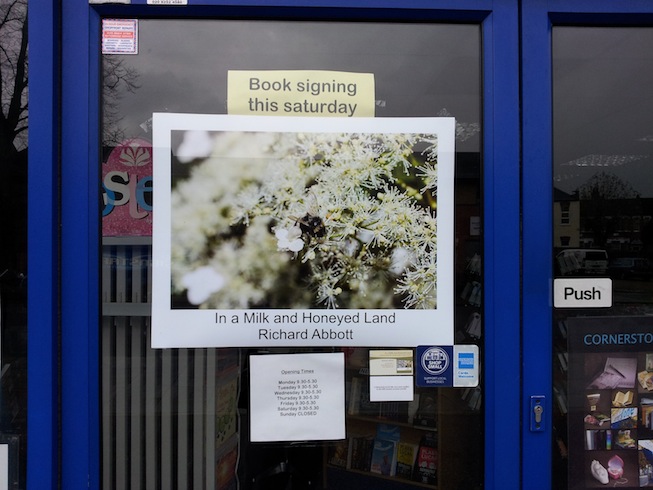
Cornerstone Books Sat Nov 17th 2012Two things this time. First, the book signing at Cornerstone Books in North Finchley on Saturday went well. Some interesting conversations, some good contacts for the future, and some book sales! Now I have to think about how to follow this up.

Secondly, the Kindle Previewer program on my Mac suddenly stopped working a short time ago, and over the weekend I managed to get it working again with the help of a blog article by Adam Bien at
http://www.adam-bien.com/roller/abien/entry/if_the_kindle_previewer_won
It turns out that the latest version of the previewer (2.7.1) does not work with Java version 1.7 (also confusingly known as Java 7). So as and when some other program updates Java, the problem surfaces. In my case it was probably one of the application development programs I have installed, but as so many things use Java it could have been something different. Whatever the root cause, the result was that Kindle Previewer would not start up.

Fortunately the blog article tells you exactly what to do – follow the directions about opening the launch file and pasting in a specific line exactly as shown, and lo and behold everything works again. Basically what you are doing is forcing the previewer to continue to use the previous version of Java, rather than it automatically selecting the newest version. In brief, you need to find the launch file
/Applications/Kindle Previewer.app/Contents/MacOS/Launcher
and insert the following as a single line of text
export JAVA_HOME=”/System/Library/Java/JavaVirtualMachines/1.6.0.jdk/Contents/Home”
directly after the initial line
#!/bin/sh
If this makes no sense at all to people then there are step by step instructions and a couple of alternate options at the above blog.

A quick experiment suggests that there is not a corresponding problem on a Windows machine, but I am not 100% certain that I have exactly the same versions of everything installed there.

I imagine that Amazon will bring out an updated version at some point, but until then this will keep you able to use the previewer.

Writing about everyday life

One of the things I particularly wanted to do with In a Milk and Honeyed Land was to write about everyday life in a small town at the end of the Late Bronze age. There are plenty of novels written about Egyptian rulers like Ramesses, Akhenaten, or Nefertiti, and a fair number written with Moses as the main figure, or David a little later on. Some of them are well worth reading, and I dare say more will join their ranks in the future. But that is not what I wanted to do. I wanted to write about the kind of life led by more ordinary figures.

This then raises questions about how to do the background research. Most literature that we have from the ancient world concerns the interests and anxieties of a small elite minority, since only these few might be literate or at least could afford to engage the services of a scribe. Every so often we get glimpses of other layers of society, but even these are seen through elite eyes. Fortunately, we have other resources in the form of archaeological digs. These, interpreted every bit as cautiously as a piece of writing, can tell us all kinds of things about everyday life. So we can get a good idea about the houses people lived in, the cooking utensils they used, their basic diet, their tools and weapons, some of the objects that featured in their religious habits, and so on. It’s a difficult business, sometimes, to interpret the cultural significance of some items, when there is no written explanation to accompany them. For example, large numbers of small modelled female figures have been found all around the Levant. These have been interpreted in a great many ways, including a goddess figure as a focus for worship, a magical or good luck charm for promoting fertility or safety in childbirth, and a children’s toy!

Now, the advantage of dealing with a small town is that I can include a good range of people within the same few houses. So Damariel, although poor and a politically nobody compared to a Pharaoh, is nevertheless on the edges of the elite. He can read and write, is responsible for the spiritual and worldly life of his people, and is entitled to correspond with other similar leaders in times of crisis. And of course almost all of the towns and city states in the region were also small. Town leaders might well style themselves “king”, but in most cases they only held sway over a few square miles of territory and maybe a couple of thousand people. It had been said of a character called Phicol, who the Hebrew Bible describes three times as “commander of the king’s army” (in Genesis 21 and 26), that he most likely commanded fewer men than the typical Fire Brigade in a contemporary small town. Titles were often grander than reality, and numbers of people involved were usually much smaller than we might expect.

Finally… only a few days now to the book signing event for In a Milk and Honeyed Land – Saturday November 17th at Cornerstone Books, from 10:30 or so until 3:30 or so. Cornerstone’s contact details are: Cornerstone Books, 45-51 Woodhouse Road, London N12 9ET, 020 8446 3056, http://www.cornerstone.co.uk/pages/1648.htm. Hope to see you there!

Spotlight review for ‘In a Milk and Honeyed Land’

A few days ago In a Milk and Honeyed Land got a boost on the Indie Author Anonymous web site in the form of one of their “spotlight” reviews. The idea is to provide a place where prospective readers can get a quick sense of what the book is about, alongside others of its kind.

The permanent link is at
http://indieauthoranonymous.com/2012/10/30/spotlight-book-in-a-milk-and-honeyed-land-by-richard-abbott/

The Indie Author Anonymous web site is worth a look around to see what else is there in the book genres that you like. You can search by different criteria, browse similar titles, or, if you are an author, avail yourself of any of several services provided.

Other news – only about a week to the book signing event for In a Milk and Honeyed Land coming up in just two weeks now – Saturday November 17th at Cornerstone Books, from 10:30 or so until 3:30 or so. Cornerstone’s contact details are: Cornerstone Books, 45-51 Woodhouse Road, London N12 9ET, 020 8446 3056, http://www.cornerstone.co.uk/pages/1648.htm

5* Review for Fargoer: End of Innocence by Petteri Hannila

Another book review for this week. Fargoer: End of Innocence by Petteri Hannila is the first part in a series of short stories. I quite like the way that Petteri is using this format for his story-telling, though it does mean that you quite rapidly get to the end of any given one in the series, and so (in my case, at least) then have to wait until you have a decent wifi connection to get the next one. Presumably those folk who got the 3G version of the kindle are spared this problem!

Anyway, Petteri has set his stories in a remote and magical part of his native Finland, and I am thoroughly enjoying the series. Since doing the review on Amazon and Goodreads I have in fact read the second in the series, so presumably I shall be playing catch-up for a while – so far there are four in the series.

The review itself can be found at Amazon.co.uk or Goodreads so I won’t repeat it here. Suffice it to say that Petteri writes persuasively about a culture that I knew very little about, and the second story starts to satisfy the hope I expressed in that review that we would learn more about the culture as a whole. I am a great enthusiast of including poetry inset into prose – this was a key theme in In a Milk and Honeyed Land – and Petteri introduces us to the myths and archetypes of these people via song. Great stuff, and I am looking forward to enjoying the rest of the series.

My own news: as well as the book bio I talked about last week at http://indaindex.com/book-bio-in-a-milk-and-honeyed-land-by-richard-abbott/ I have also had a book “spotlight” of which more in a few days time. Meanwhile the link is at http://indieauthoranonymous.com/2012/10/30/spotlight-book-in-a-milk-and-honeyed-land-by-richard-abbott/. I also got some very encouraging comments from a reader here in London, who I hope will put electronic pen to digital paper and put their comments into a review!

Finally, don’t forget the book signing event for In a Milk and Honeyed Land coming up in just two weeks now – Saturday November 17th at Cornerstone Books, from 10:30 or so until 3:30 or so. Cornerstone’s contact details are: Cornerstone Books, 45-51 Woodhouse Road, London N12 9ET, 020 8446 3056, http://www.cornerstone.co.uk/pages/1648.htm